
Why Won't ACC Cover Me?
Paul runs a small building crew out of Hamilton, three guys and himself on the tools most days. Twenty-two years in the trade, and until last spring he’d never really thought about what would happen if his body gave out before his mortgage did. Then a disc in his lower back went. Not from a fall, not from dropping something on himself, just from two decades of lifting framing timber and carrying gib up ladders. He went to his doctor, expecting ACC to take it from there. They said no.
It’s a common assumption here. Grow up in New Zealand and ACC just feels like part of the furniture, the thing quietly waiting to catch you if something goes wrong. Get hurt, ACC steps in, simple as that. Except it isn’t that simple, and the moment people find out otherwise is usually the worst possible moment to learn it: mid-claim, in pain, and often unable to work.
ACC was built to cover one specific thing: injury caused by accident. That’s a narrower category than most people assume, and the space between what people expect it to cover and what it actually covers is where a lot of Kiwis get caught out.
It’s an accident scheme, not a health insurer
This is the bit that trips almost everyone up sooner or later. ACC exists to cover accidents: the fall off a ladder, the crash on the Southern Motorway, the torn ACL on the football field. If there’s a specific moment you can point to, and that moment caused the damage, you’re generally covered.
Illness is a different story entirely. Cancer, heart disease, diabetes, most mental health conditions, the everyday sicknesses that knock someone out of work for weeks at a time, none of it is what ACC is for. Get diagnosed with bowel cancer and you’re dealing with the public health system and, if you’ve got it, your own income protection. ACC doesn’t come into it, because nothing about a diagnosis is an accident.
Wear and tear rarely counts as injury
The one that catches people most off guard is the slow stuff. A knee that’s been grinding for a decade, a back that finally gives up, a shoulder worn smooth from twenty years of the same repetitive movement. None of that has an accident behind it, so ACC tends to treat it as a degenerative condition rather than an injury, and decline the claim.
Go back to Paul. His back didn’t go because he slipped or copped a blow. It went because of twenty-two years of lifting, bending over foundations, and carrying weight up ladders. There’s no single incident ACC can point to. From their side, that’s not an injury. It’s what happens to a body that’s done that kind of work for two decades. It felt sudden to him. To ACC, it was gradual, and gradual, degenerative conditions sit largely outside the scheme, no matter how real the pain is or how much it’s costing him in lost income.
It doesn’t only happen to tradies, either. Ross drives a taxi around Christchurch, has done for years. When his knee started going numb, his back wasn’t even on his radar, there was no back pain to speak of, just numbness creeping in around the knee. His GP sent him for scans expecting to find a knee problem. Instead, they found a nerve being pinched further up, in his lower back. It happens that way sometimes. A compressed nerve in the spine can send numbness all the way down to the knee without any warning signs closer to home.
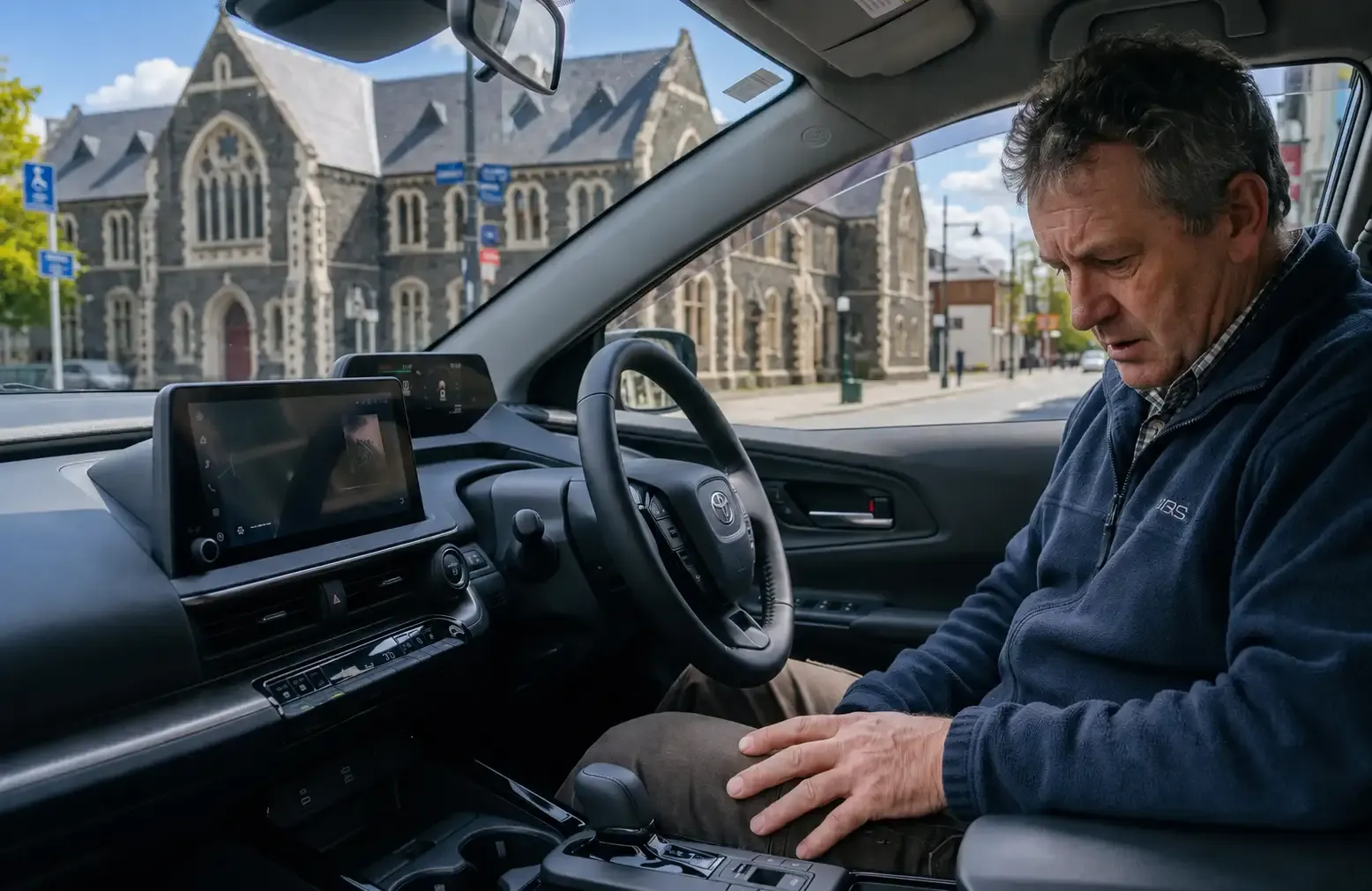
The scans that found the nerve also told ACC everything it needed to decline the claim. The discs involved were showing arthritic changes, wear built up over years rather than anything from a specific event. Ross needed surgery to take the pressure off the nerve. The numbness was real, the nerve compression was real, the surgery was genuinely necessary. None of that changed the answer, because the cause traced back to arthritis rather than an accident.
The same injury, two different outcomes
Here’s where it gets properly frustrating, because an identical injury can be treated in completely different ways depending on how it happened.
Take someone driving stock trucks around Mid Canterbury, twenty years on the rural roads out past Ashburton. Say he wrenches his back badly one afternoon loading a trailer sitting at an awkward angle. That’s an accident. There’s a date, a description, a cause, and ACC should accept it without much argument.
Now say instead his back has been quietly wearing down for two decades behind the wheel, years of vibration and awkward lifting with no single moment he can point to. Same driver, same eventual outcome, but ACC is far more likely to call this gradual deterioration and turn it down. Same sore back, same job, completely different verdict. It all comes down to whether there’s an accident ACC can attach it to.
There is a narrow path for work-related conditions
It isn’t a complete dead end. New Zealand law allows cover for what’s called a work-related gradual process injury, for conditions that build up over time because of the specific tasks or environment of someone’s job. Meatworkers who develop wrist and hand problems from repetitive cutting motions, or people who lose hearing after years on a factory floor, are the kind of cases that can succeed through this route.
The bar sits high, though. A claimant generally has to show that something particular about their work, not just work in general, caused or contributed to the condition, and the medical evidence has to back that link up. Plenty of genuine, career-ending injuries don’t clear it, especially for someone who’s held several physically demanding jobs over the years and can’t pin the wear on any one employer.
Treatment itself can go wrong
There’s a smaller, separate category worth knowing about. If a registered health professional injures you while treating you, and that injury isn’t just a normal or expected part of the treatment, ACC can cover it under what’s called treatment injury cover.
Say someone in Dunedin goes in for a routine knee arthroscopy and comes out with nerve damage that has nothing to do with the knee problem they went in for. ACC can cover the nerve damage. What it won’t cover is the original knee condition that sent them in for surgery, since that’s the underlying issue rather than something the treatment caused. It’s a useful safety net in a narrow set of circumstances, and it catches people out because the line between “caused by the treatment” and “the reason you needed treatment” isn’t obvious until you’re the one living it.
So what happens when ACC says no?
None of the above matters as much as this question, because a decline letter doesn’t stop the bills arriving.
Go back to Paul one more time. As his own boss, there’s no sick leave sitting behind him and no employer still paying him while he’s off. When his back went and ACC turned him down, the income stopped at roughly the same time he did. His wife picked up extra shifts, they leaned on savings that were meant for the kids’ school fees, and for a few months, the mortgage kept him up at night more than the injury itself.
That’s exactly the gap private cover is built to sit in. Income protection replaces a portion of your income whether the cause is an accident or an illness, and for the specific worry that kept Paul up at night, there’s also mortgage cover, a version of income protection built to keep the repayments going if you can’t work. Trauma or health cover deal with the serious conditions ACC was never designed to touch. Between them, they cover the space ACC leaves open, and for gradual and degenerative conditions, that space is bigger than most people realise.
The bottom line
ACC is a genuinely good scheme, but it was built with a narrow job: cover accidents. Illness, wear and tear, and the degenerative conditions that come with age or a lifetime of physical work mostly sit outside its lines, and finding that out after the injury has already happened is the worst possible time to learn it.
If you want to see where your own gaps actually sit, we can connect you with a licensed financial adviser who can look at your situation and explain what cover would genuinely protect you if ACC says no.
Get matched with a trusted insurance adviser →
This article is general information only and doesn’t take your personal circumstances into account. It isn’t financial advice. For advice tailored to your situation, speak with a licensed financial adviser.